


Flexible Food Preparation
Field observations of Arabian babblers show that the birds transport different caterpillar species to distinct substrates depending on how they need to process the caterpillar for eating. The findings, reported in the journal Animal Cognition, are among the few to describe flexible food processing methods in wild animals.
Read more at my Animal Minds blog: Birds’ Preparation Methods Vary with the Meal.

Elephant Greetings
A new study shows that African elephants use specific combinations of vocalizations and gestures to greet each other during reunions. What’s more, they may deliberately change their communication methods depending on whether the other elephant is looking at them or not.
Read more at my Animal Minds blog: How Does an Elephant Say Hello?

Active Wound Treatment in an Orangutan
Researchers observed a wild Sumatran orangutan applying the chewed-up leaves of a medicinal plant to a facial wound. It’s the first report of wound treatment with a biologically active plant in the wild. The behavior, which may have reduced pain and inflammation and supported wound healing, may have evolved in a common ancestor shared by humans and great apes.
Read more at my Animal Minds blog: Orangutan Treats His Wound with a Medicinal Plant.
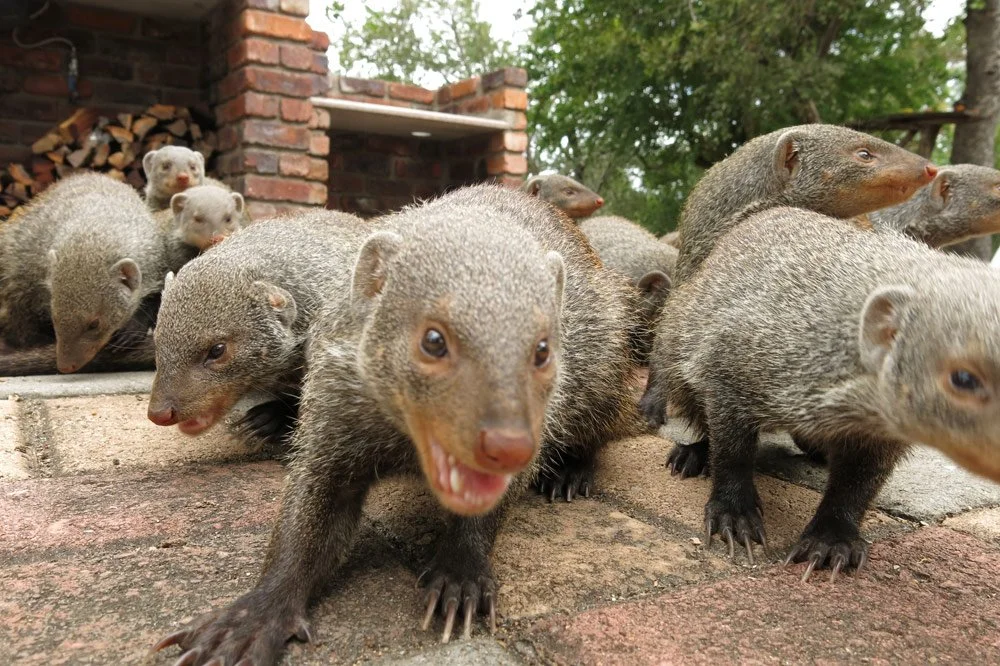
Animal Warfare
Like humans, mongooses and termites also go to war with their own kind. What clues can these model species provide about the evolution and consequences of inter-group conflict, and the conditions that promote peace?
Read more at my Animal Minds blog: What Can Humans Learn From Animal Warfare?

Self-Recognition in Snakes
What does it mean if snakes pass a self-recognition test, and how might that ability relate to their social lives?
Read more at my Animal Minds blog: Snakes, Self-Recognition, and Sociality.